
Storm Pipe Lining Repair: A Property Owner’s Guide to Trenchless Storm Drain Rehabilitation
Storm pipes do some of their most important work when the weather is at its worst. They move rainwater away from:
- Homes
- Commercial buildings
- Parking lots
- Roads
- Driveways
- Roof drainage systems
- Retention areas
- Detention ponds
- Catch basins
- Landscaped property
Most of the time, those pipes are out of sight. That also means deterioration can continue underground for years before a property owner realizes there is a problem.
A failed storm pipe can contribute to:
- Sinkholes and erosion
- Standing water and flooding
- Pavement settlement and washouts
- Soil loss and damaged landscaping
- Water collecting around structures
Traditionally, repairing a badly deteriorated underground storm drain often meant excavating the pipe. Today, trenchless storm pipe lining can rehabilitate many damaged storm drains and culverts from inside the existing pipe, dramatically reducing the amount of excavation required.
One of the most common rehabilitation methods is cured-in-place pipe, or CIPP. ASTM F1216 specifically recognizes CIPP pipe lining for applications including storm sewers, describing the installation and curing of a resin-impregnated tube inside an existing conduit to create a continuous, tight-fitting finished pipe.
Depending on the pipe, contractors may also use:
- Sectional CIPP repairs (trenchless point repair)
- UV-cured, heat-cured, or ambient-cured lining
- Spiral-wound pipe
- Sliplining
- Mechanical joint repair
- Spray-applied rehabilitation systems
- Other engineered trenchless technologies
What Is Storm Pipe Lining?
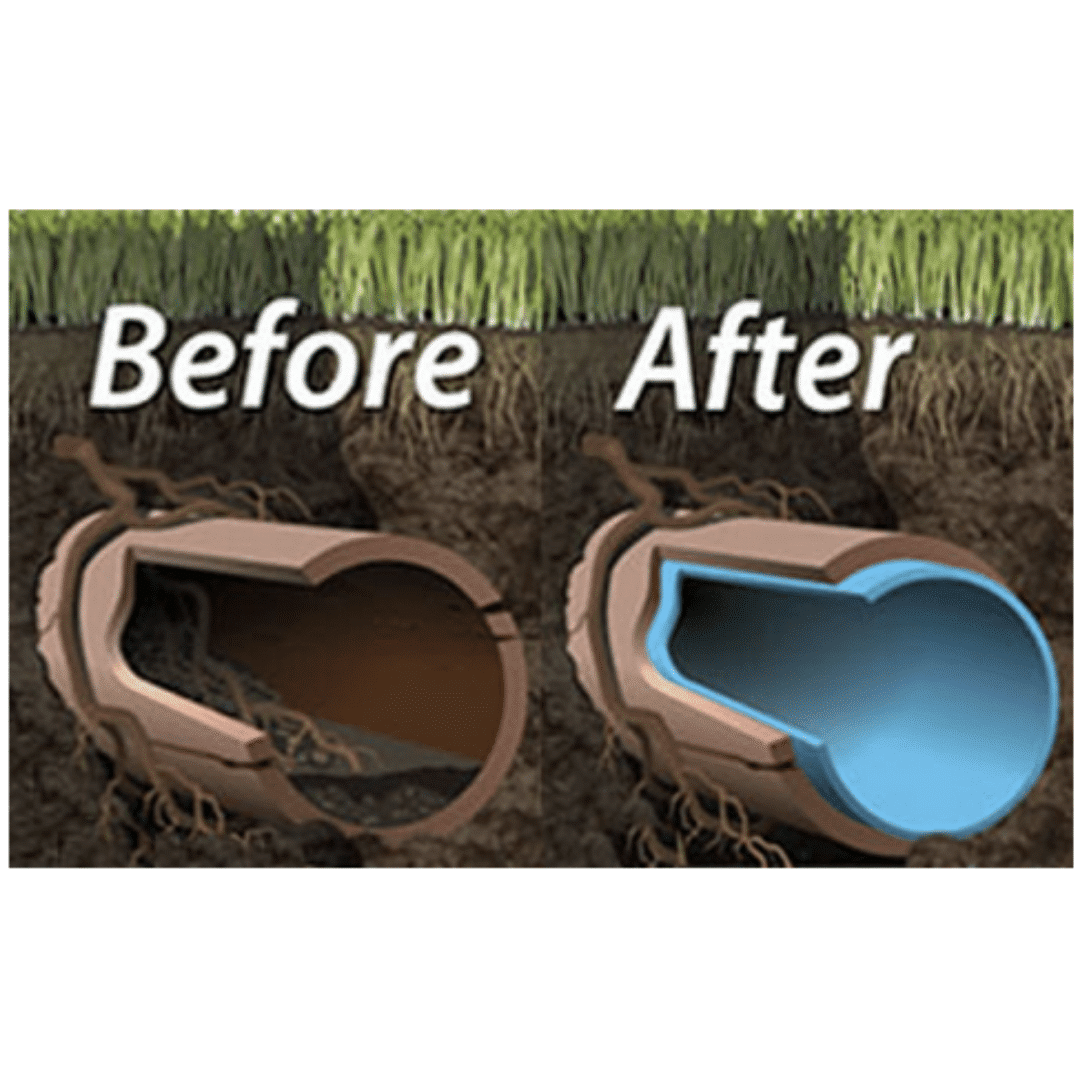
Instead of excavating the entire old pipe, the contractor works from existing access points, pipe ends, catch basins, manholes, or limited access excavations. With CIPP, a flexible liner containing resin is installed inside the existing pipe. The liner is expanded against the host pipe and cured using hot water, steam, ambient conditions, UV light, or LED photoinitiated curing.
NASSCO describes CIPP as a close-fitting trenchless rehabilitation method capable of creating a seamless structural pipe inside a deteriorated host pipeline.
Is a Storm Sewer the Same as a Sanitary Sewer?
This distinction is critical for project design. Because storm systems discharge directly into the environment, material selection, chemical curing protocols, runoff control during construction, and local environmental compliance are held to strict standards.
What Types of Storm Pipes Can Be Lined?
One advantage of trenchless rehabilitation is that it can be adapted to many existing host pipe materials, including:
- Reinforced concrete pipe (RCP)
- Corrugated metal pipe (CMP)
- Corrugated steel and aluminum pipe
- Vitrified clay pipe
- Cast iron and Ductile iron
- PVC and HDPE
- Brick structures and masonry arches
- Irregular or non-round drainage conduits
Can Corrugated Metal Storm Pipe Be Lined?
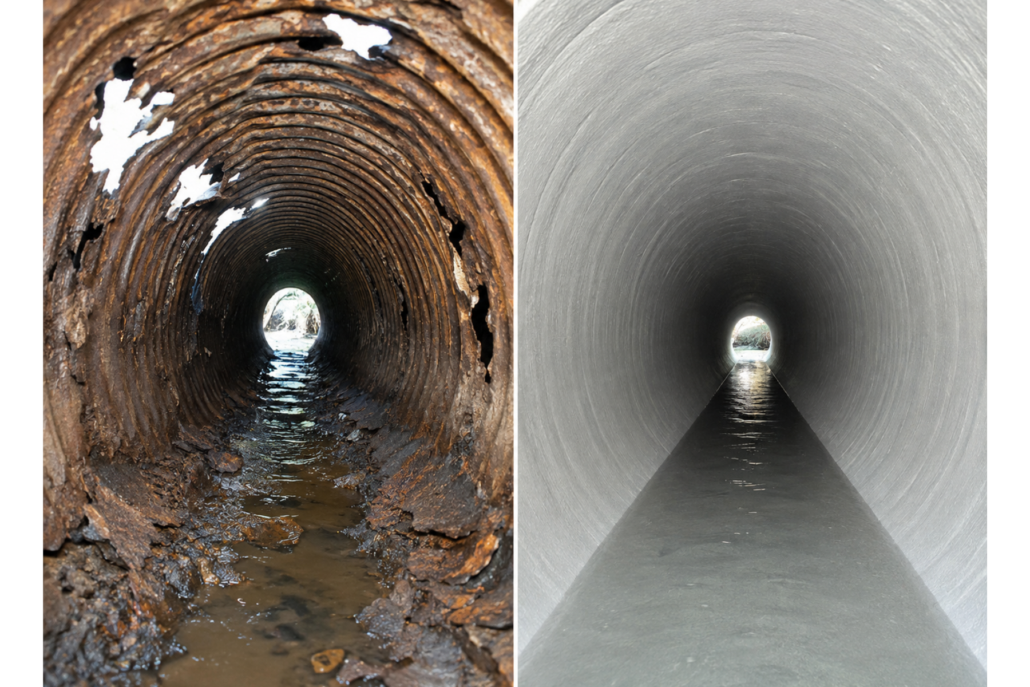
Corrugated metal drainage pipes deteriorate due to corrosion, abrasion, constant moisture, and loss of metal along the invert (the bottom flow line). As holes develop, soil migrates into the pipe, leading to external voids, pavement settlement, and sinkholes. The Federal Highway Administration (FHWA) identifies corrosion and abrasion as top causes of early failure and documents extensive success using CIPP to rehabilitate CMP without opening up roadways.
Can Concrete Storm Pipe Be Lined?
A initial inspection determines whether concrete defects are localized (suitable for a point repair) or systemic throughout the line. Long stretches of cracking or exposed reinforcement justify full-length structural rehabilitation.
What Problems Can Storm Pipe Lining Repair?
- Cracked or corroded pipes
- Leaking or failed pipe joints
- Holes and missing invert material
- Infiltration (groundwater leaking in) and Exfiltration (stormwater leaking out)
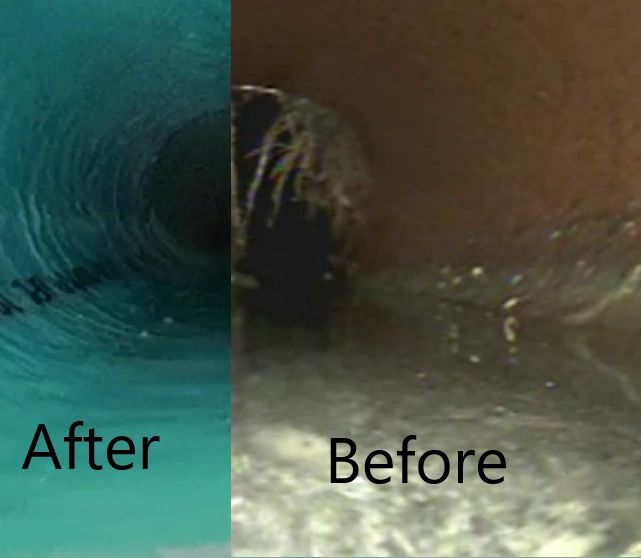
- Root intrusion
- Localized and widespread internal structural deterioration
- Aging culverts beneath roads, buildings, or heavy pavement
How Does Storm Pipe Lining Work?
- Inspection: Conducted via sewer camera inspection (CCTV) or direct visual entry for large culverts to diagnose structural defects, alignment, and soil migration.
- Cleaning: Heavy hydro-jetting or mechanical cleaning removes mud, gravel, trash, roots, and mineral deposits.
- Water Flow Management: Pumping or temporary bypass planning prevents storm surge disruption during installation.
- Host Pipe Preparation: Protrusions are ground down and active infiltration leaks are plugged.
- Liner Installation: The resin-impregnated tube is inverted or pulled into position.
- Curing: Controlled hot water, steam, or light cures the resin into a rigid new pipe.
- Connection Restoration: Catch basin inlets and side drainage tie-ins are cut open robotically.
- Final Inspection: Post-lining CCTV verifies structural integrity and guarantees full flow restore.
What Is UV Storm Pipe Lining?
UV curing is ideal for commercial storm drains because it eliminates the need for massive water heating or steam equipment on-site, offering precise cure-rate monitoring and very high structural wall strength relative to thickness.
Can Storm Pipes Be Repaired With Point Repairs?
Using trenchless point repair saves significant budget when 90% or more of the existing host pipe remains structurally sound.
What Is Spiral-Wound Storm Pipe Lining?
It requires no chemical resin curing during installation and can expand tightly against the host pipe or be installed with structural grout pumped into the outer annular space.
CIPP vs. Spiral Wound for Storm Pipe Repair
| Feature | CIPP | Spiral Wound |
|---|---|---|
| Primary Material | Resin + Felt / Fiberglass Liner | Mechanically Wound PVC Profile |
| Trenchless Installation | Yes | Yes |
| Chemical Curing Required | Yes (Heat, UV, or Ambient) | No (Mechanical Interlocking) |
| Irregular & Non-Round Shapes | Yes | Yes (System specific) |
| Large Diameters / Culverts | Yes | Yes |
Can You Line a Storm Culvert?
Can You Line a Storm Pipe Under a Parking Lot?
Can You Line a Storm Pipe Under a Road?
Can Lining Fix a Storm Pipe That Is Leaking?
Yes. A structural CIPP liner creates a seamless internal barrier that eliminates infiltration (groundwater entering) and exfiltration (stormwater escaping). Note: If escaping water has already washed away external soil, subterranean void grouting may be required in conjunction with lining.
Can Storm Pipe Failure Cause a Sinkhole?
Yes. When joints fail or holes form, surrounding soil washes into the pipe during storms. This creates massive underground voids that eventually collapse surface asphalt or landscape into sinkholes.
Does Storm Pipe Lining Reduce the Pipe Diameter?
Yes, slightly. However, because new CIPP liners have an exceptionally smooth internal surface compared to corroded metal or rough concrete, total hydraulic flow capacity is typically maintained or even improved.
Can You Line a Completely Collapsed Storm Pipe?
Can Storm Pipe Lining Fix Bad Grade or Slopes?
No. Liners follow the existing geometry and grade of the host pipe. They cannot physically raise bellies or correct improper original slope.
Storm Pipe Lining vs. Excavation
| Factor | Storm Pipe Lining | Open Excavation |
|---|---|---|
| Trenching Required | Minimal / None | Full Length Trenching |
| Pavement & Surface Damage | Near Zero | Extensive Demolition |
| Project Duration | Typically 1–3 Days | Weeks |
| Corrects Bad Elevation/Grade | No | Yes |
| Replaces Completely Collapsed Pipe | No | Yes |
What Should I Ask a Storm Pipe Lining Contractor?
- Can you show me the CCTV pre-inspection video documenting the failure?
- Is this problem localized or present throughout the entire storm pipeline?
- What specific lining technology (CIPP, UV, Spiral Wound) do you recommend and why?
- Is the liner engineered as fully structural per ASTM F1216 or ASTM D5813 standards?
- How was the liner wall thickness calculated for live traffic and depth loads?
- What is your water management and bypass pumping plan if it rains during curing?
- How do you handle post-lining inspection and warranty verification?
Frequently Asked Questions About Storm Pipe Lining
Storm pipe lining rehabilitates an existing storm drain or culvert by installing a structural liner inside the old pipe without excavating the entire line.
Yes. ASTM F1216 expressly identifies storm sewers and gravity drainage lines among primary applications for CIPP rehabilitation.
Yes. Corrugated steel and aluminum drainage pipes with corroded inverts are ideal candidates for trenchless structural lining.
Lining seals the pipe defect to stop active soil loss, but existing subterranean voids must be separately filled with compaction or grout injection.
Minimal internal diameter reduction occurs, but hydraulic flow capacity is usually preserved or improved due to lower internal friction.
Storm Pipe Lining, Point Repair or Replacement: Start With the Failure
One of the biggest mistakes in underground infrastructure repair is choosing a favorite technology before diagnosing the failure. An excavation contractor will favor digging, while a lining installer will push CIPP. Always perform a professional camera inspection to evaluate the cause of failure first.