
Sewer Camera Inspections Before & After Trenchless Pipe Repair
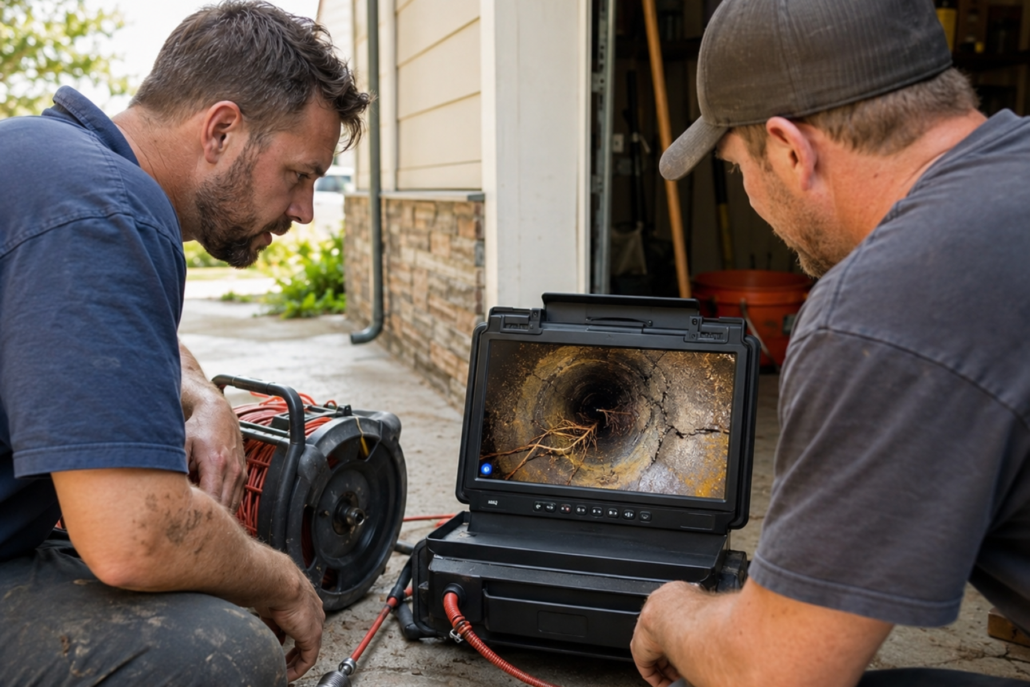
If someone tells you that your underground sewer line needs thousands of dollars of repair, there is one thing you should want to see before approving the work:
The pipe.
And when the repair is finished?
You should see it again.
A sewer camera inspection allows a trained contractor to visually inspect the inside of an underground sewer line without excavating it. The camera can reveal many of the conditions that help determine whether a pipe needs cleaning, localized repair, full-length lining, pipe bursting, excavation or possibly no structural repair at all.
NASSCO identifies detailed closed-circuit television, or CCTV, inspection as a primary tool for evaluating sewer-pipe condition and notes that CCTV can help identify pipe material, structural and maintenance defects, service connections and obstructions such as roots and debris.
For property owners considering trenchless repair, the camera has two distinct jobs:
- Before the repair: Diagnose the problem and help determine the correct solution.
- After the repair: Document what was installed and visually verify the completed work.
Those two inspections should tell a story:
- Here is what the pipe looked like.
- Here is what was wrong.
- Here is why this repair was recommended.
- And here is what the pipe looks like now.
If you are paying for trenchless pipe repair, that before-and-after documentation may be one of the most useful things you receive.
What Is a Sewer Camera Inspection?
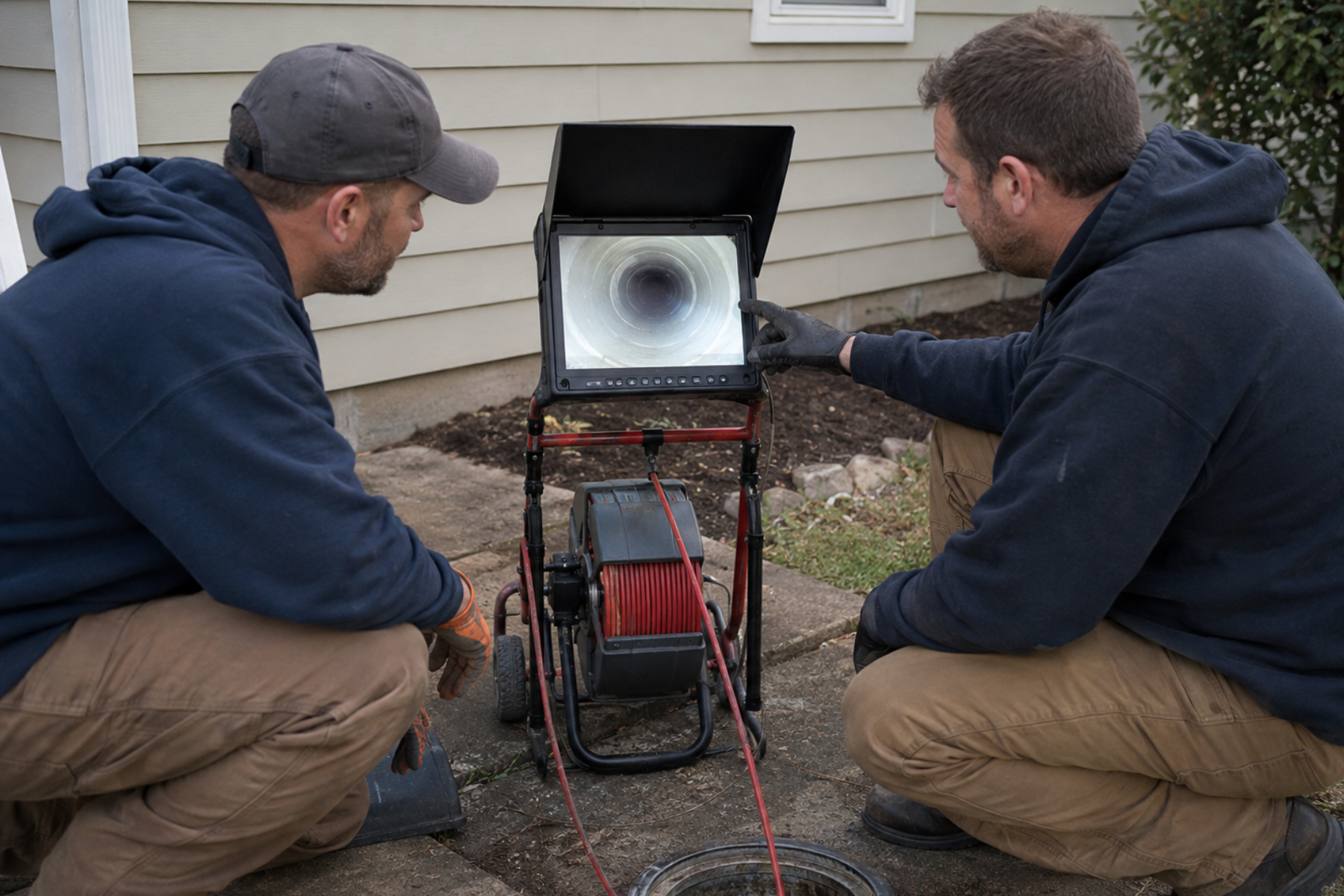
A sewer camera inspection uses a specialized waterproof camera to visually examine the inside of a sewer or drain line.
Depending on the pipe and equipment, cameras may be:
- Push cameras
- Self-leveling cameras
- Pan-and-tilt cameras
- Tractor-mounted CCTV systems
- Lateral inspection cameras
- Panoramic or side-scanning systems
Professional sewer inspection systems are designed for different pipe diameters and applications. NASSCO notes that adequate lighting, camera positioning and focus are important to obtaining a useful inspection, and that camera equipment should be appropriate for the size of pipe being inspected.
For a typical residential sewer lateral, the contractor may push a camera through a cleanout or other access point. For larger municipal or commercial piping, more sophisticated crawler and pan-and-tilt systems may be used.
Regardless of camera type, the objective is the same: Get a clear enough view of the pipe to understand its condition.
Why Is a Sewer Camera Inspection Important Before Trenchless Repair?
Because the repair method should follow the diagnosis—not the other way around.
A contractor cannot responsibly determine whether you need:
- Cleaning
- Root removal
- A trenchless point repair
- Sectional CIPP
- Full-length CIPP pipe lining
- Pipe bursting
- Excavation
…without understanding what is actually happening inside the sewer.
EPA guidance for trenchless rehabilitation specifically recommends pre-installation CCTV to verify pipe conditions, identify openings or defects that could interfere with lining, and track service connections. Its pipe-bursting guidance likewise calls for video of the existing pipe and CCTV verification of pipe diameter, bends, dips and connections before installation.
A homeowner should therefore be skeptical of anyone who jumps straight from: “Your sewer is backing up” to “You need a complete replacement.” The camera should help answer why.
What Should a Sewer Camera Inspection Look for Before Pipe Repair?
A thorough inspection should evaluate more than one obvious defect. The contractor should be looking at the entire accessible section of pipe, not simply stopping when the first problem appears.
Important conditions include:
Cracks and Fractures
Cracks can range from relatively minor localized defects to signs of widespread structural deterioration. One crack may be a good candidate for point repair. Repeated cracking throughout the line may support a different recommendation. The number, location and severity of defects matter.
Broken or Missing Pipe
A camera may reveal sections where part of the pipe wall is damaged or missing. The contractor needs to determine whether the pipe still has enough shape and continuity for trenchless rehabilitation.
Tree Roots
Roots themselves are not the entire diagnosis. The more important question is: How did the roots get into the pipe?
Possible entry points include:
- Cracked joints
- Separated joints
- Fractures
- Holes
- Failed connections
If roots are entering at one localized joint, point repair may be worth considering. If roots are entering every few feet through an aging jointed sewer, the problem may be much broader. NASSCO specifically lists roots and other obstructions among conditions that CCTV can help identify.
Offset or Separated Joints
The camera should show whether pipe sections remain aligned. A small joint defect may be repairable internally. A large offset can reduce pipe diameter, interfere with flow or prevent certain trenchless systems from being properly installed. A liner does not physically move badly displaced pipe back into alignment.
Corrosion and Scaling
Older cast iron pipe can contain rust, scale, tuberculation, deposits, channeling, and significant internal deterioration. A contractor needs to determine whether the pipe can be adequately cleaned and prepared for lining. The camera also helps determine whether deterioration appears localized or extends throughout the line.
Orangeburg Deformation
Orangeburg pipe can deform, flatten and deteriorate. A camera inspection can show whether the pipe still has a usable shape or whether deformation has become severe enough that another repair method should be considered.
Bellies or Sags
A sewer camera can reveal areas where water remains standing in the pipe, potentially indicating a low area or change in grade. EPA pipe-bursting QA/QC guidance specifically calls for current video information that includes sags and recommends inspecting for unexpected bends or dips.
This matters because a CIPP liner follows the existing pipe. Lining a belly does not automatically correct the underlying grade.
Grease, Debris and Scale
A dirty pipe can hide defects. Cleaning may be required before the contractor can accurately inspect the host pipe and before lining can be installed. The “before” camera inspection may therefore happen more than once: Initial inspection → cleaning/preparation → final pre-installation inspection.
Pipe Material
The contractor should identify the existing pipe material whenever reasonably possible. Common sewer materials include cast iron, clay, PVC, ABS, concrete, and Orangeburg. Material matters because cleaning methods, repair options and preparation requirements vary.
Pipe Diameter
Diameter helps determine camera equipment, liner size, packer size, bursting equipment, cleaning equipment, and repair feasibility. EPA guidance for pipe bursting specifically recommends CCTV verification that diameter is consistent.
Bends
A contractor should understand the number and severity of bends before attempting a trenchless installation. Certain equipment, liners and packers have practical limitations on what they can navigate.
Branch Connections and Laterals
Connections need to be located before lining work. A full-length CIPP liner can cover incoming branch connections until they are properly reinstated. EPA guidance specifically identifies locating service connections as part of pre-installation CCTV inspection.
Should the Sewer Be Cleaned Before the Final Pre-Lining Camera Inspection?
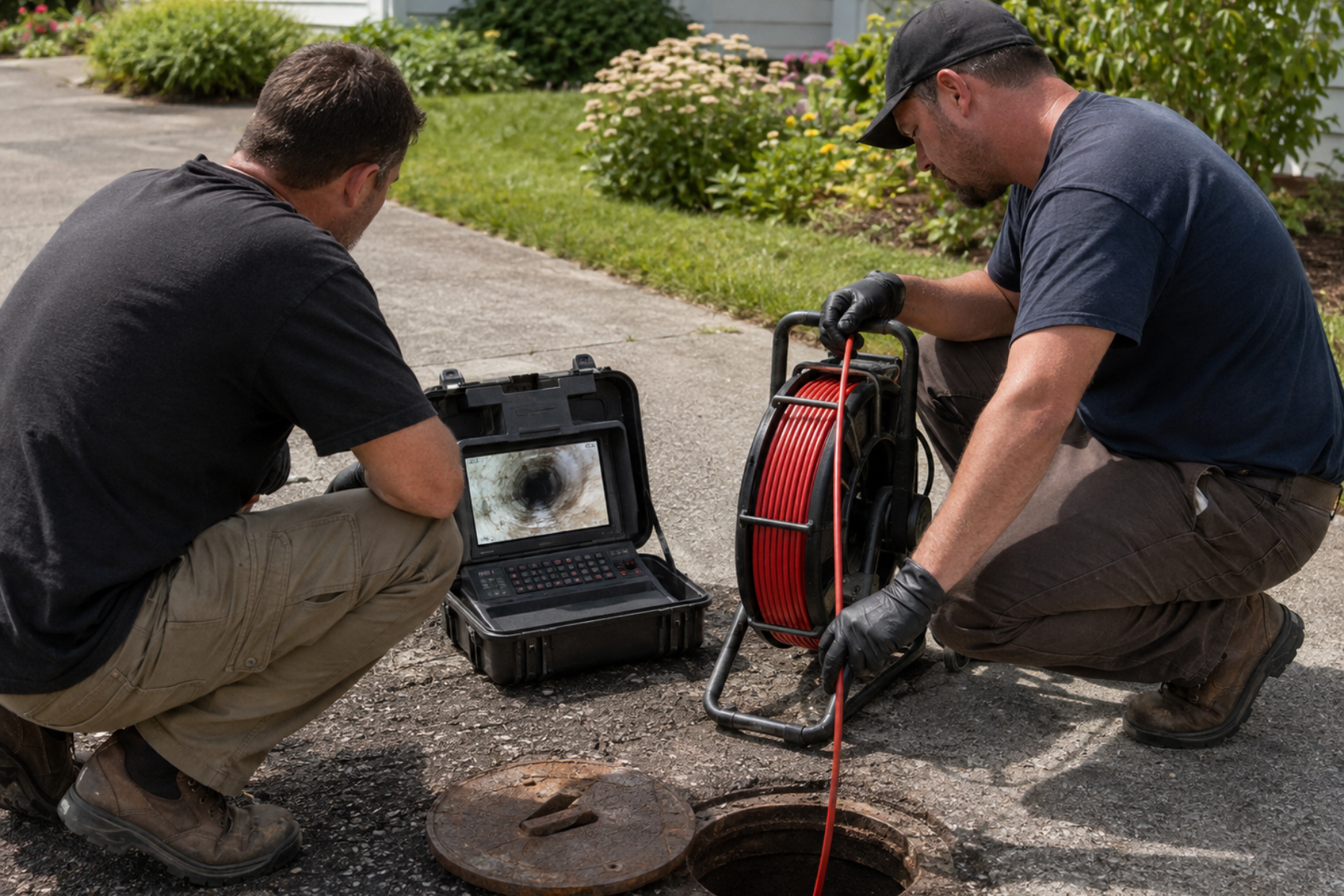
Yes, when cleaning is needed to properly evaluate and prepare the pipe. A camera running through heavy scale, roots, grease and debris may not give the contractor a clear view of the actual host pipe.
This creates an important distinction:
- Diagnostic inspection: The first camera inspection may identify the general problem.
- Pre-installation inspection: After cleaning, descaling or root removal, another camera pass can confirm what the pipe actually looks like and whether it is ready for rehabilitation.
EPA QA/QC guidance recommends CCTV before lining to verify that the host pipe is ready and to identify defects or protruding services that could interfere with the installation. For property owners, that means a dirty first video should not necessarily be the only video used to design the repair.
Can a Sewer Camera Tell You Exactly What Repair You Need?
A sewer camera provides extremely important visual information, but the camera is a diagnostic tool—not the repair decision by itself. The contractor still needs to interpret what the video shows.
That interpretation should consider:
- Pipe material & diameter
- Depth & access
- Defect severity & quantity
- Pipe shape & grade
- Connections & property conditions
- Available repair technologies
NASSCO uses standardized condition-assessment programs such as PACP and LACP to create consistent terminology for identifying and classifying pipeline conditions. A homeowner inspection may not be a formal PACP-coded municipal assessment, but the underlying principle is valuable: Identifying a defect and determining its significance are two different things.
Does a Sewer Camera Show Everything?
No. A sewer camera is primarily a visual assessment tool. It can provide a tremendous amount of information about the interior of a pipeline, but specialized technologies may be needed when more detailed dimensional or structural measurements are required.
NASSCO notes that sewer assessment can also use technologies such as laser profiling, sonar, infrared imaging, 3D modeling and other specialized systems.
For an ordinary residential inspection, do not assume a camera video alone provides a precise measurement of:
- Remaining wall thickness
- Soil conditions outside the pipe
- Exact structural capacity
- Exact pipe slope
- Hidden voids outside the pipe
The camera is extraordinarily useful. It is not X-ray vision.
What Should You Receive From a Sewer Camera Inspection?
At minimum, ask to see the complete inspection. For significant trenchless repair, request a saved copy of the video whenever practical.
A useful inspection should allow you to understand:
- Where the camera entered and how far it traveled
- Where the defect is located and what it looks like
- What the surrounding pipe looks like
- What material the contractor believes the pipe is
- What repair is being recommended and why it fits the observed condition
Professional municipal specifications can be far more rigorous, calling for electronic recordings under PACP-based inspection programs. While a residential homeowner does not necessarily need a municipal-grade report, clear documentation remains essential.
Why Is a Sewer Camera Inspection Important After Pipe Lining?
Because the completed liner is underground. You cannot walk over to it and inspect the installation. The post-installation camera becomes one of the most practical ways to visually evaluate the finished interior of the rehabilitated pipe.
EPA CIPP QA/QC guidance recommends post-installation CCTV with adequate lighting and a clear view of the finished liner so that blemishes and deviations from an ideal installation can be documented.
For a property owner, the post-lining camera should answer:
- Is the liner where it is supposed to be?
- Is the pipe open and clear for wastewater flow?
- Were the necessary connections restored?
- Are there visible installation issues that need attention?
What Should You Look for After CIPP Pipe Lining?
A property owner does not need to become a CIPP engineer, but there are several key points worth asking the contractor to show you:
- The Entire Rehabilitated Section: Do not settle for a five-second clip of the prettiest section. Ask to see the whole repaired run.
- The Beginning of the Liner: The camera should clearly show where the new liner starts.
- The Interior Surface: Look for visual irregularities. Not every visible mark represents a failed liner, which is why a qualified contractor should explain anything unusual.
- Transitions: Check where the rehabilitated pipe transitions into the existing pipe to ensure it doesn’t create an obstruction.
- Branch Connections: Confirm that active branch or lateral connections were properly reinstated and are open.
- The End of the Liner: Verify where the installed liner terminates.
- Flow Path: Ensure the final pipe provides a usable path. If significant standing water remains, ask why.
Why Is Camera Inspection Important After a Trenchless Point Repair?
With a point or sectional repair (patch), placement is everything. The post-repair inspection should show:
- The repair is located directly over the intended defect.
- The repaired section is open.
- The exact beginning and end of the patch.
- Smooth transitions between the host pipe and repair.
- The visible condition of the completed repair.
If the contractor diagnosed a broken joint at 37 feet, the post-repair video should clearly show: “Here is the repair at 37 feet, and here is what it looks like now.”
Should a Sewer Be Camera Inspected After Pipe Bursting?
Yes, for gravity sewer pipe bursting, post-installation CCTV is an important QA/QC step.
Pipe bursting replaces the existing pipe rather than lining it. After the new sewer has been pulled in, inspection documents:
- The new pipe interior
- Connections
- Visible condition & alignment
- Unexpected installation issues
Rule of thumb: If the sewer can reasonably be inspected before the work and after the work, ask to see both.
Before-and-After Sewer Camera Inspection: What Should Change?
A good before-and-after comparison should make the purpose of the repair obvious.
Before & After CIPP Lining
- BEFORE: Cracks, root entry, corroded pipe, failed joints, missing pipe sections, holes, or deteriorated surfaces.
- AFTER: A continuous, smooth rehabilitated interior across the lined section with completed transitions and reinstated connections.
Before & After Point Repair
- BEFORE: One broken joint, localized fracture, isolated root-entry point, or single hole.
- AFTER: A clear sectional repair spanning directly over that specifically damaged area.
Before & After Pipe Bursting
- BEFORE: Widespread structural deterioration, multiple failed joints, cracked clay, or collapsing pipe.
- AFTER: The clean interior of a newly installed replacement pipe.
Should the Contractor Give You the Before-and-After Videos?
Yes, and if they do not offer naturally—ask for them.
These recordings serve as valuable documentation for your property records, plumbing history, warranty questions, and future resale value. Always get this confirmed in writing before work starts: “Will I receive copies of the before-and-after sewer camera inspections?”
What Makes a Bad Sewer Camera Inspection?
Watch out for these red flags during an inspection:
- Moving too quickly: Flying through the pipe misses critical defects. Slow movement is necessary for a real inspection.
- Inadequate lighting: If the video is too dark to see the pipe walls clearly, it has limited value.
- Dirty lens: Water, grease, or mud on the lens obscures defects.
- Inspecting a filthy pipe: Uncleaned pipes hide defects under roots and scale. Cleaning should come first.
- Showing only a single frozen image: One screenshot shows a single defect, not the health of the rest of the pipe.
- Lack of explanation: The operator should clearly explain what you are looking at.
- Refusal to show post-repair footage: You should always be allowed to visually confirm completed work.
Frequently Asked Questions About Sewer Camera Inspections
It can show standing water and visual evidence suggesting that the pipe has a low area. However, a standard camera does not automatically provide a complete engineered grade survey. Remember: Lining a pipe will not fix a belly, as the liner simply follows the existing grade.
A camera can show conditions associated with leakage—such as visible infiltration, failed joints, holes, or cracks—but it cannot always guarantee leak-tightness without secondary pressure testing.
Yes. Roots are among the most obvious finding on camera. However, the diagnosis shouldn’t stop at finding roots; it must identify where and how they are entering (e.g., cracked joints vs. fractured pipe walls).
Visibility decreases significantly when the camera is submerged. A clear view of the pipe wall is essential for a meaningful assessment.
No. A conventional camera provides a visual interior inspection but cannot measure remaining wall thickness. Ultrasonic or specialized testing is required for precise structural measurements.
It is highly recommended, especially for older homes with clay, cast iron, or Orangeburg pipes, or properties with mature trees. Knowing the pipe condition beforehand can save thousands in unexpected repairs.
What Should You Ask During a Sewer Camera Inspection?
Don’t hesitate to ask the technician these direct questions while reviewing the video:
- “What material is this pipe?”
- “What exactly is wrong here, and where is it located?”
- “Is this an isolated problem or widespread throughout the line?”
- “Can the pipe be cleaned before making a final repair decision?”
- “Does this pipe have a belly?”
- “Why are you recommending this specific repair method over alternatives?”
- “Will you camera the line again after the repair is finished?”
What Should Be Included in a Good Trenchless Repair Proposal?
Ensure your written proposal clearly outlines:
- Pipe section being repaired & approximate length
- Existing pipe diameter & material
- Specific repair method (CIPP, point repair, pipe bursting)
- Cleaning, descaling, and root removal scope
- Branch connection reinstatement (if applicable)
- Inclusion of pre- and post-installation camera inspections
- Warranty details and provision of video recordings
The Camera Should Tell the Story
Trenchless technology makes it possible to repair underground sewer lines with minimal excavation. But because the work happens underground, property owners need proof of what was broken and what was fixed.
Before the repair, the camera identifies the problem. After the repair, it verifies the solution. Don’t be afraid to ask your contractor to walk you through the video step-by-step.
Find a Trenchless Pipe Repair Contractor Near You
See the problem first. Repair what needs repaired. Then see the result.
Find a Trenchless Contractor Near Me